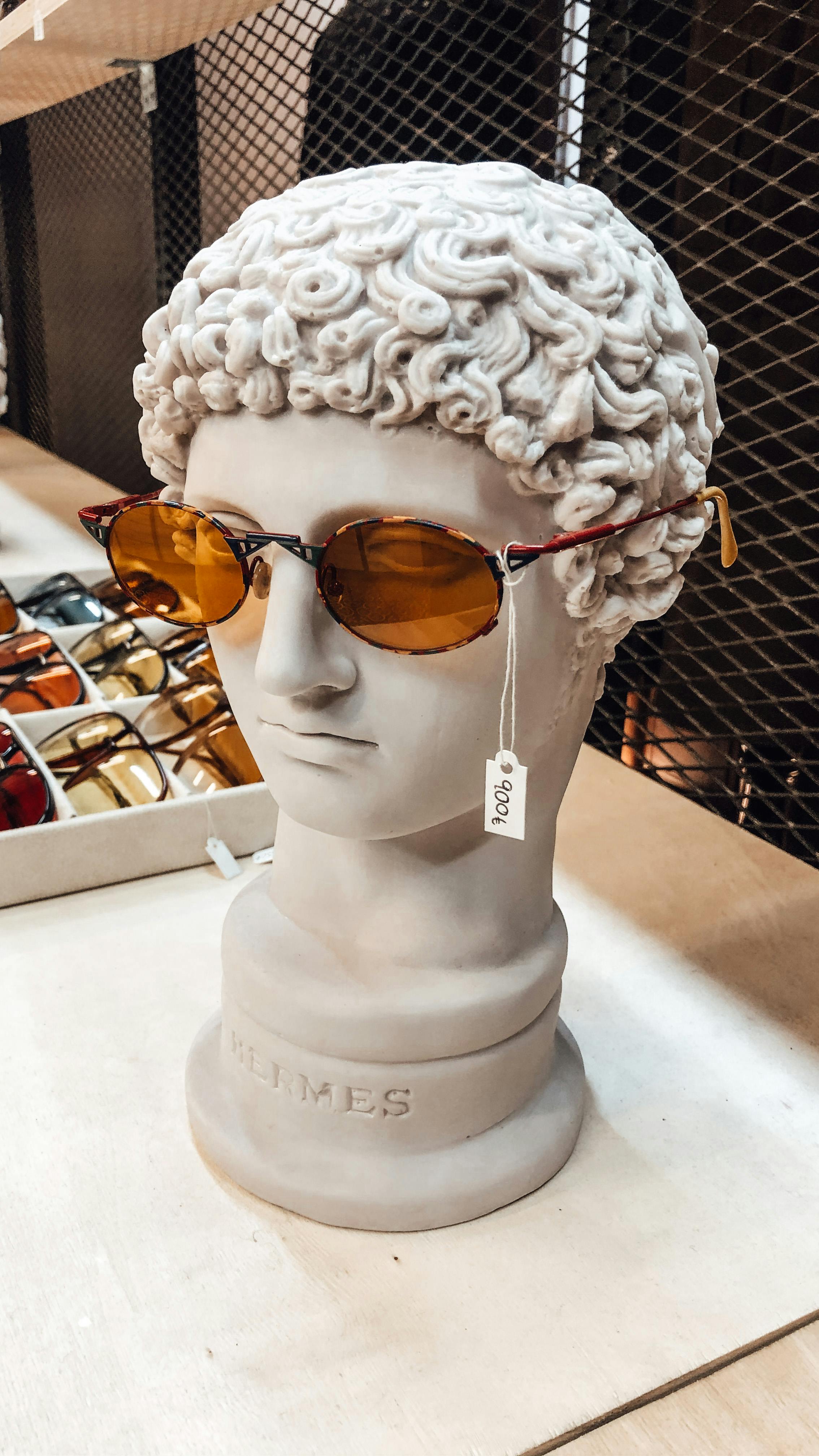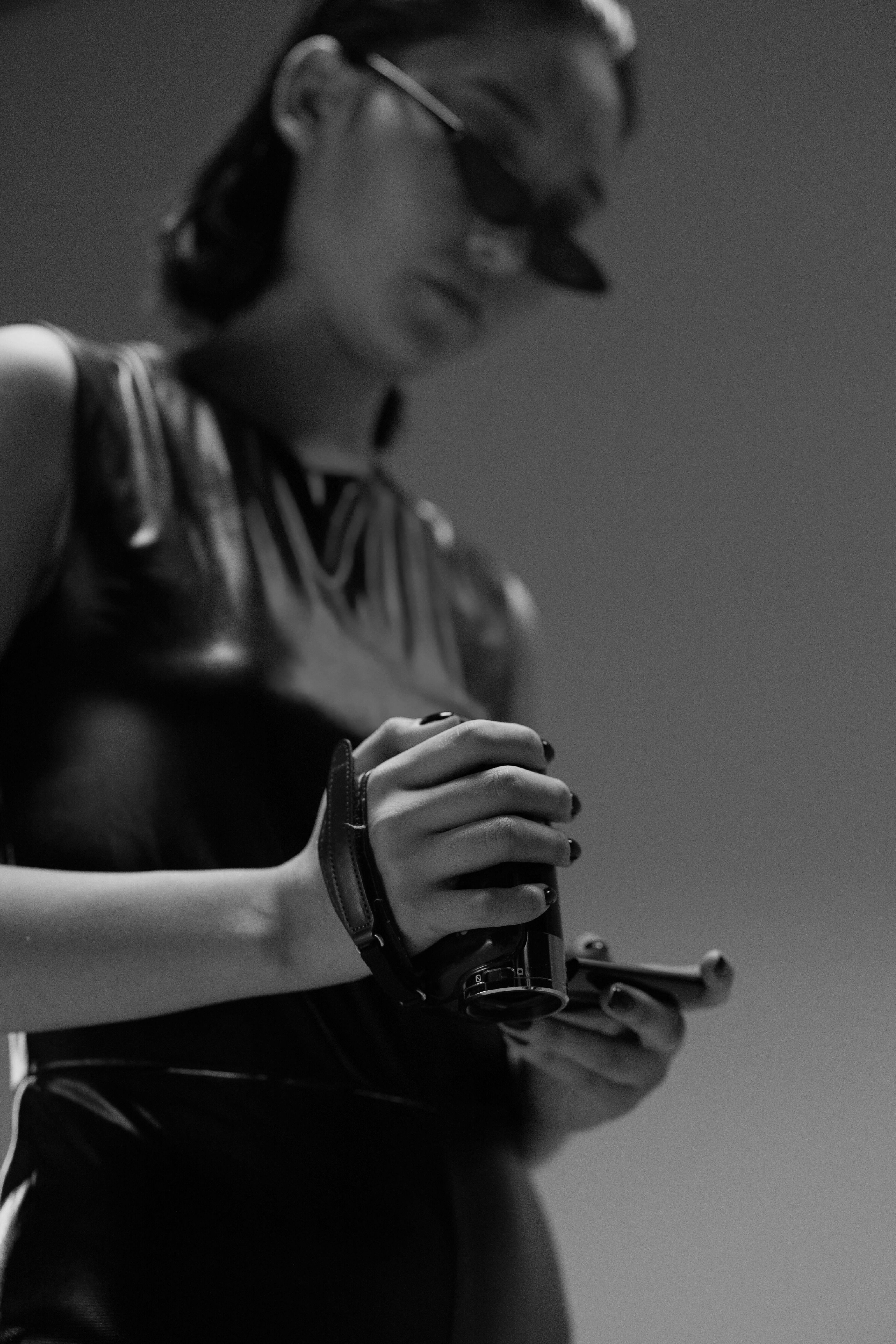
There’s a recurring visual in cinema that directors reach for with remarkable consistency: the moment a character puts on sunglasses. It’s never arbitrary. In film grammar, sunglasses serve a specific function that no other accessory can replicate. They conceal the eyes, and in a medium that depends on eye contact for emotional transmission, that concealment becomes a statement.
The eyes are where audiences read intention, vulnerability, deception, and desire. Remove them from the equation and you fundamentally alter the audience’s relationship with a character. The person behind the lenses becomes harder to read, more guarded, more powerful, or more suspicious, depending on the context.
Directors have understood this for decades. The history of sunglasses in film is essentially a history of strategic concealment.
The shield: hiding vulnerability
When Holly Golightly appears in the opening scene of the 1961 film, her oversized frames aren’t a fashion statement within the world of the story. They’re armor. She’s eating a pastry outside a jewelry store at dawn, performing a version of herself that she needs the world to believe in. The glasses are the performance. They create a boundary between her interior life and the image she projects.
This use of sunglasses as emotional shield recurs throughout cinema. Characters in moments of grief, composure, or deception reach for dark lenses. The accessory becomes shorthand for “I am not available to be read right now.”
The power play: controlling the gaze
The Wachowskis understood something fundamental about sunglasses and power dynamics. In their 1999 film, nearly every character in the simulated world wears sunglasses during moments of control or combat. The lenses aren’t just cool. They’re a visual signal of who holds information and who doesn’t.
When a character removes their glasses in that film, it’s almost always a moment of vulnerability or honest communication. The removal matters precisely because the concealment has been established as the default. The lenses become a toggle between guarded and exposed.
This power-play function appears across genres. Authority figures, antagonists, and characters with secret knowledge are consistently given dark lenses. It’s a visual shortcut that audiences process without consciously analyzing it.
The transformation: becoming someone else
Perhaps the most common narrative use of sunglasses is the transformation moment. A character puts on a pair of frames and becomes, visually and psychologically, a different version of themselves. The accessory externalizes an internal shift.
This works because sunglasses genuinely do change how people perceive you. Research in social psychology has shown that covering the eyes reduces perceived approachability while increasing perceived confidence and social dominance. Directors exploit this perception gap constantly.
The transformation can be aspirational, as when a character steps into a more confident identity, or it can be ominous, as when concealment signals that a character has crossed a moral line. Either way, the visual logic is the same: the glasses mark a before and after.
The cool factor: and why it works narratively
It would be dishonest to discuss sunglasses in film without acknowledging the cool factor. Certain characters become iconic partly because of their eyewear, and that iconography feeds back into how audiences remember and interpret the film.
But coolness in cinema isn’t just aesthetic. Cool characters are characters who maintain composure, who reveal less than they know, who seem in control of their environment. Sunglasses literalize all of these qualities. They are, in the most direct sense, a prop that makes a character harder to know, and unknowability is a prerequisite for cinematic cool.
This is why the same visual device works in action films, noir, comedies, and drama. The underlying mechanism is always about controlling information flow between character and audience.
The enduring grammar
New films continue to use sunglasses with the same intentionality because the visual logic hasn’t changed. As long as cinema depends on the human face for emotional storytelling, anything that modifies the face’s readability will carry narrative weight.
The next time you notice a character putting on or taking off sunglasses in a film, pause on the moment. Ask what the director gains from hiding or revealing the eyes at that specific point in the story. The answer is almost never “nothing.” It’s almost always a deliberate choice about power, vulnerability, transformation, or control.
That’s the real legacy of sunglasses in cinema. They’re not costumes. They’re instruments.