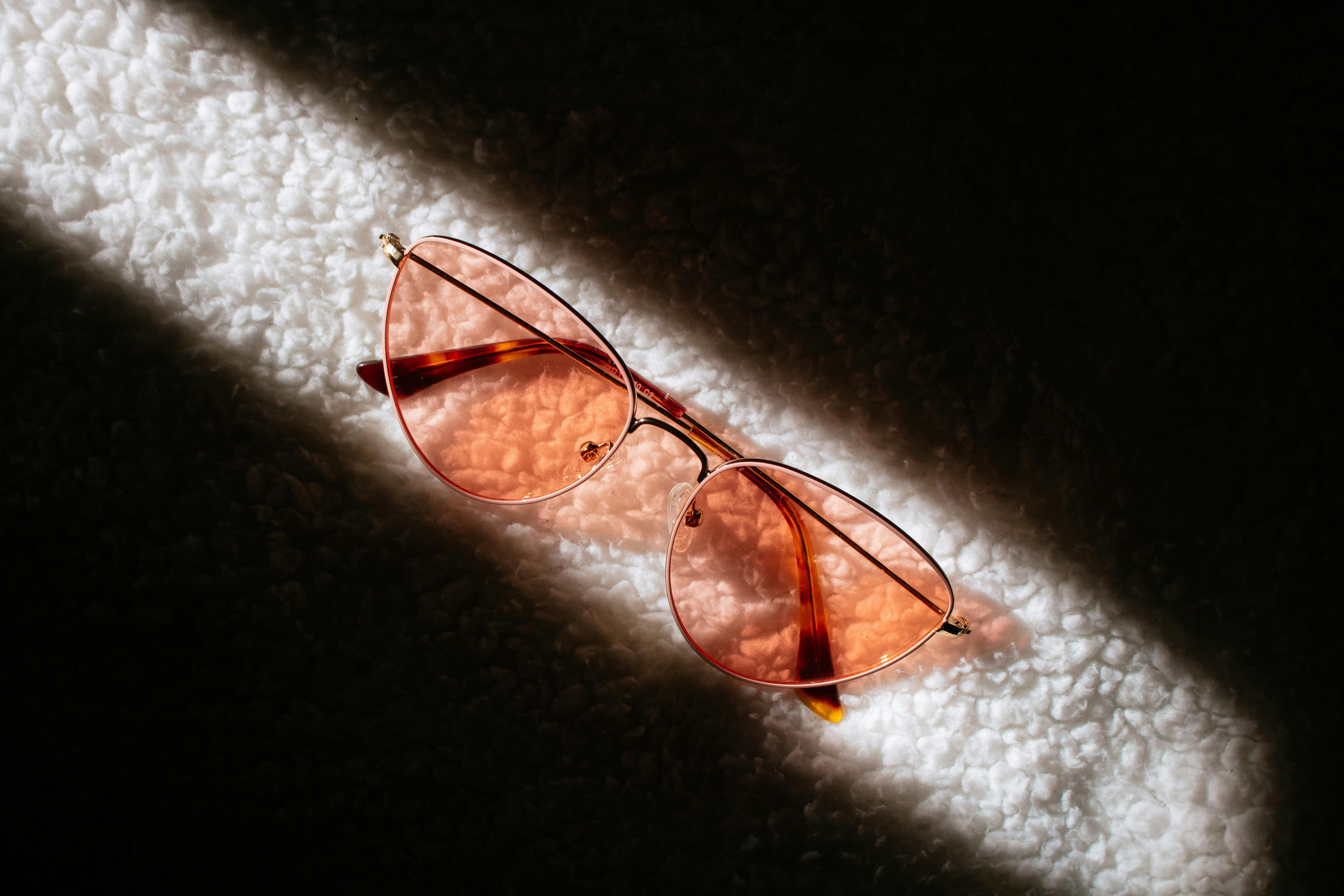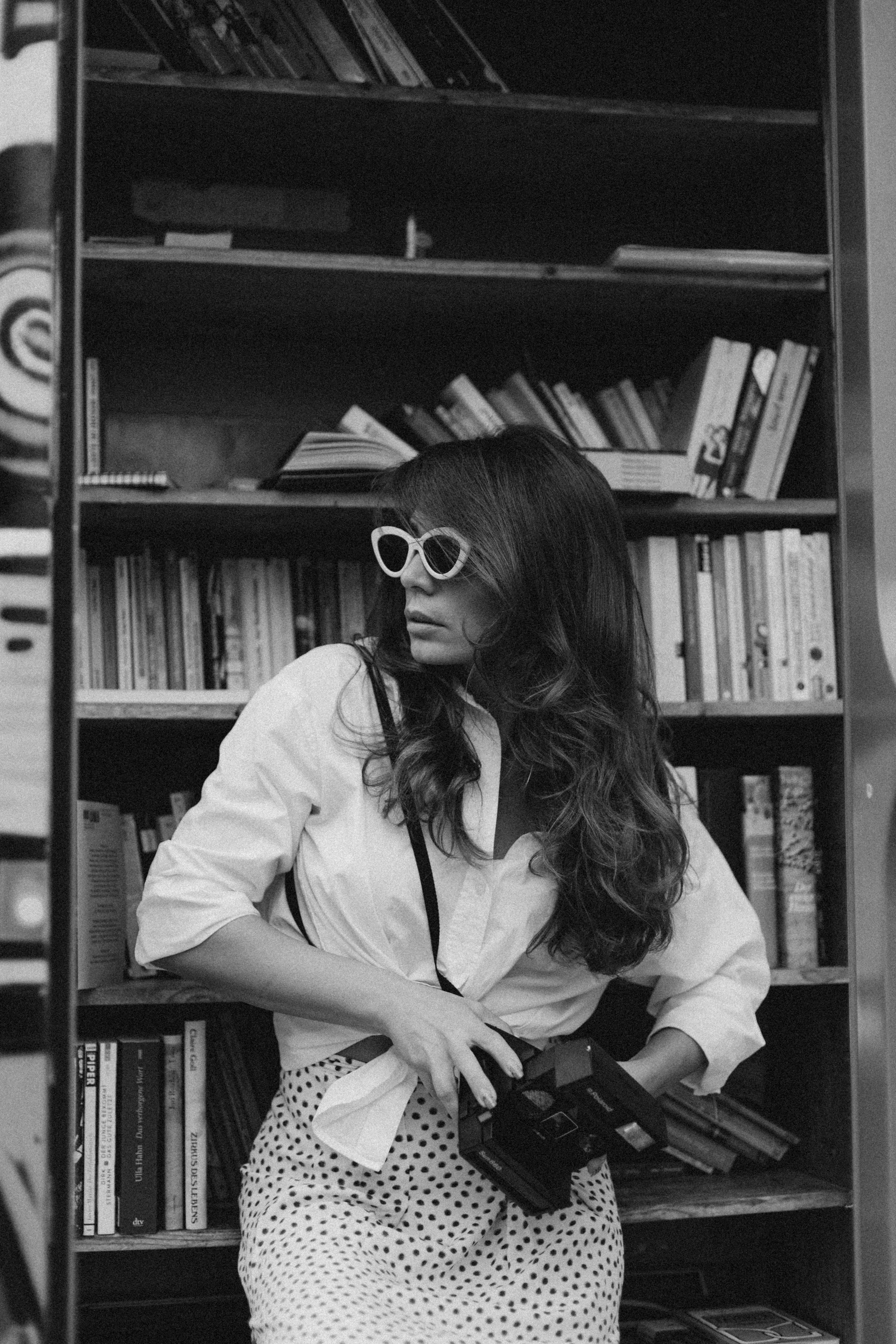
Jean-Luc Godard wore rectangular glasses throughout his career with the consistency of a signature. Anna Karina wore sunglasses in Vivre sa Vie with the deliberateness of someone who understood that dark lenses create distance, and that distance, on film, reads as interior depth. Jean-Paul Belmondo’s sunglasses in À bout de souffle were not an accessory. They were a posture — the entire stance of a man who has decided to perform coolness as a philosophical position.
The French New Wave was the first cinema that treated eyewear as characterization. This is not a minor observation. It is a shift in how a designed object functions within a visual medium — and its influence on contemporary eyewear aesthetics, particularly in the independent label market, is still operating sixty years later.
The documentary impulse and the visible object
The New Wave directors were reacting against the careful artifice of classical Hollywood cinema and the cinéma de qualité of postwar French film. Their aesthetic response was to introduce elements of the real world — location shooting, available light, improvised dialogue, actual streets — into a medium that had been defined by controlled studio environments.
This documentary impulse changed the status of objects in frame. In a studio production, every prop has been selected and placed by an art department. Objects exist to support narrative or to signal character efficiently to an audience trained on visual conventions. In a Godard or Truffaut film shot on Parisian streets with real people walking through the background, objects are present because they are present — because that person was wearing those glasses, and the camera caught it.
The result was a paradox: the New Wave’s insistence on documentary reality produced some of the most imitated and aesthetically influential object choices in cinema history. Because the glasses were not deliberately chosen for symbolic efficiency, they could carry more meaning. They were clothing, which is to say they were the accumulated decisions of a person about how to appear in the world.
Anna Karina and the sunglasses as barrier
Karina’s use of sunglasses in Vivre sa Vie (1962) is the clearest example of how New Wave directors understood eyewear as a cinematic instrument. The film’s structure — twelve tableaux, each a self-contained scene — places enormous weight on the face. Godard frequently shoots Karina in direct address or near-direct address, which in classical film grammar would signal access to interiority.
The sunglasses deny that access. In the scenes where Karina wears them indoors — at a café, in a billiard hall — they create a rupture in the visual logic. The audience is being told to look at the face and simultaneously prevented from reading it. The sunglasses are doing what Godard wanted the film to do: refuse the comfortable identification that classical cinema offers.
This is a design use that no accessory department planned. The glasses were Karina’s. The camera made them mean something.
Belmondo and performed nonchalance
Belmondo’s sunglasses in À bout de souffle (1960) work differently. Michel Poiccard is performing a character — the American gangster, specifically Humphrey Bogart — and the sunglasses are part of the performance. He wears them with the self-consciousness of a man who is watching himself be cool, which is a very specific and very French mode of irony.
The frames themselves are unremarkable by contemporary standards: a standard rectangular frame of the late 1950s. What makes them significant is the posture they belong to. Belmondo wears them tilted slightly, not quite aligned with his face, as if he put them on without looking. This carelessness is studied. The sunglasses signal that their wearer is indifferent to how he appears, which is the most deliberate appearance possible.
The independent eyewear labels that draw on New Wave aesthetics are drawing on exactly this quality: the studied casualness, the frame that sits on the face as if it has always been there rather than as if it was chosen.
The intellectual’s glasses
If the New Wave sunglasses belonged to a certain studied cool, the glasses of the New Wave intellectuals belonged to a different register entirely. Godard’s rectangular frames, Sartre’s thick acetate ovals, the specific glasses worn by characters in Rohmer’s moral tales — these were not fashion objects. They were equipment.
The intellectual’s glasses in New Wave cinema are worn without self-consciousness. They are what the person wears because they need to see. This absence of performative relationship to eyewear produces its own aesthetic — the frames read as revealing rather than concealing, as though choosing to wear practical glasses in an era of design-forward eyewear is itself a statement.
The tension between these two registers — the cool posture of the sunglasses and the honest utility of the intellectual’s frames — maps almost exactly onto the aesthetic divided that contemporary independent eyewear navigates. The best labels understand both modes and produce objects that can function in either direction.
The contemporary inheritance
The influence of New Wave visual culture on contemporary independent eyewear design is not primarily about specific shapes or references. It is about a relationship to objects — the belief that a designed object can carry meaning without announcing it, that the most powerful aesthetic statements are the ones that look like they were not trying.
Labels working in this space — and there are more of them now than at any point in the past twenty years, operating at a much wider range of price points — tend to share this sensibility. The frame is not a statement. It is a position. The difference is subtle and entirely visible.
VEIL Collectives, for instance, operates in this register with its Eclipse and Axon collections: frames that have a strong design identity but wear without self-consciousness, that could appear in a New Wave film as clothing rather than costume. This is not an accident of aesthetic coincidence. It is the result of a design culture that has absorbed the New Wave’s lesson about objects and authenticity at sufficient depth to produce it again, in different materials, at a different price point, for a different generation.
The New Wave directors could not have anticipated this specific lineage. They were making films about real people wearing real things. The fact that those things became a design canon is what happens when the documentary impulse is applied with genuine visual intelligence. The camera catches what is there. Sometimes what is there turns out to be exactly right.