There is a reason dictators wear sunglasses. There is also a reason democratic politicians almost never do, at least not in official photographs. The dark lens in political imagery is one of the most loaded visual signals in public life, and its meaning has remained remarkably consistent across cultures and decades.
The signal is simple: I can see you, but you cannot see me. In political contexts, that asymmetry of visibility is a direct expression of power.
The dictator’s accessory
Compile images of twentieth and twenty-first century authoritarian leaders and the sunglasses appear with striking frequency. The dark lens serves multiple functions in these contexts, and all of them relate to the performance of unchecked authority.
First, concealment. Authoritarian power depends partly on unpredictability. A leader whose reactions cannot be read is a leader whose next move cannot be anticipated. Dark lenses eliminate the most expressive part of the human face from public view, creating an opacity that reads as either calm control or latent threat, depending on the viewer’s position relative to that power.
Second, intimidation. Eye contact is the primary mechanism of interpersonal accountability. When you can see someone’s eyes, you can gauge their attention, their honesty, and their emotional state. Remove the eyes from the equation and the face becomes a mask. Masks are inherently threatening because they signal that normal social contracts have been suspended.
Third, vanity performed as menace. Many authoritarian leaders adopted sunglasses that were fashionable in their era, often aviators or oversized frames that projected an image of modernity and cosmopolitan style. The vanity was not incidental. It communicated that the leader existed above the concerns of ordinary governance, occupying a space where personal style and state power merged.
The democratic avoidance
Democratic politicians operate under opposite visual imperatives. They need to project transparency, empathy, and accessibility. Dark lenses undermine all three.
A candidate who wears sunglasses during a town hall meeting signals that they are hiding something, even if the only thing they are hiding is sensitivity to light. A president photographed in dark lenses during a diplomatic meeting invites speculation about their health, their attention, or their attitude. The visual vocabulary of democracy requires visible eyes because visible eyes imply visible intentions.
The exceptions are instructive. Politicians wear sunglasses in two contexts without penalty: athletic or leisure activities (where the functional justification overrides the symbolic risk) and moments of deliberate informality (where the sunglasses signal that the politician is off-duty and human). In both cases, the context neutralizes the authoritarian association.
Outside these contexts, the dark lens is avoided. Campaign consultants and media advisors understand, even if they do not articulate it in these terms, that a politician in sunglasses looks like a person with something to hide.
The security apparatus aesthetic
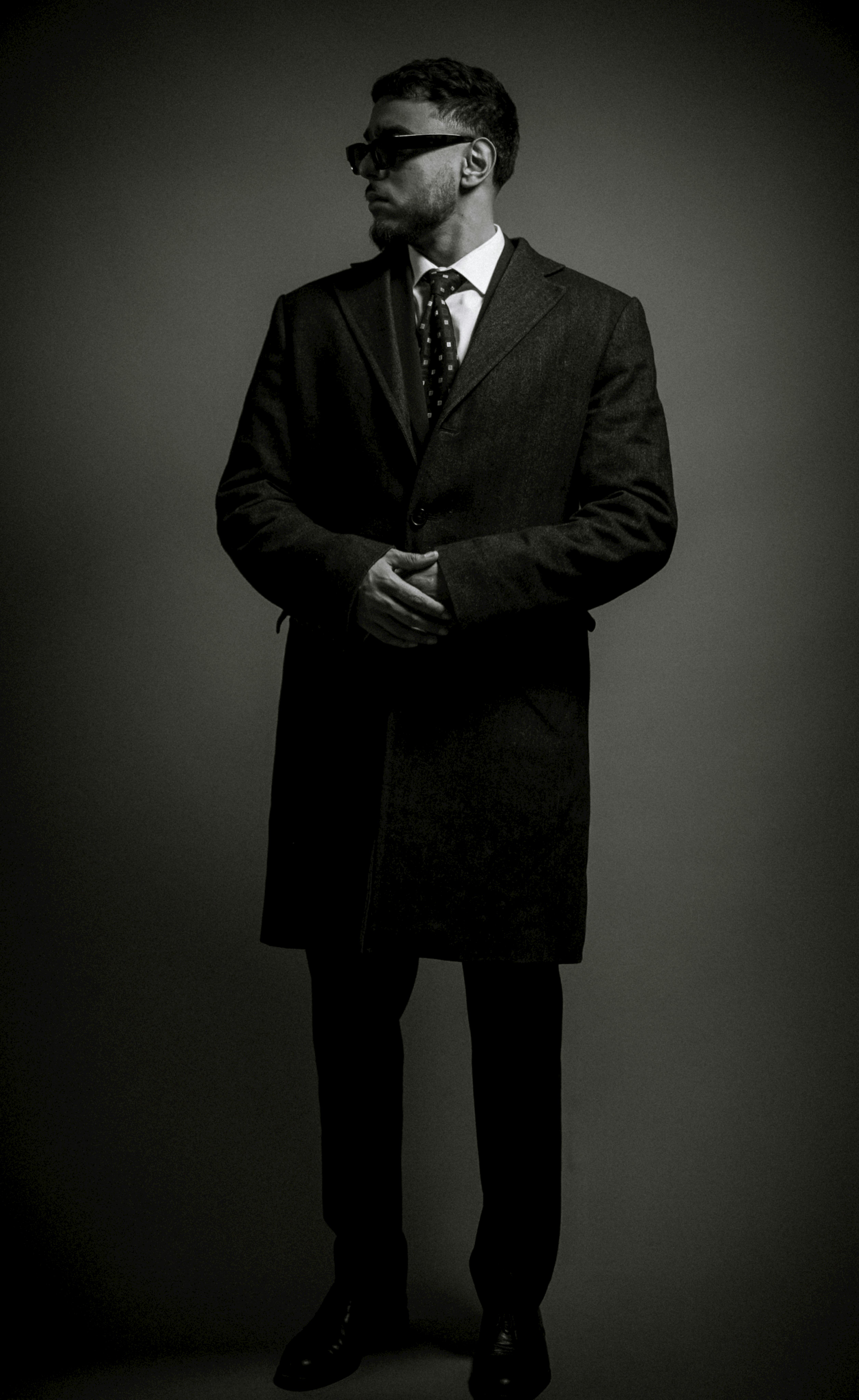
Between the dictator and the democrat sits a third category: the security professional. Secret Service agents, bodyguards, and military personnel in dark sunglasses occupy a visual space that is explicitly authoritarian by design.
Their sunglasses serve the same concealment function as the dictator’s but within a sanctioned framework. They are authorized to watch without being watched. The dark lens communicates that they are not participants in the public space but overseers of it. Their opacity is institutional rather than personal.
This is why the security aesthetic has been so widely adopted in fashion. Wearing sunglasses that evoke the bodyguard silhouette borrows the visual authority of the security apparatus without the actual power. It is cosplay for confidence, and it works precisely because the original signal is so strong.
What this tells us about eyewear and power
The political history of dark lenses reveals something fundamental about how eyewear functions as a social technology. Sunglasses are not just tools for managing light. They are tools for managing visibility.
Every pair of dark lenses creates an asymmetry: the wearer sees out, the world does not see in. In democratic contexts, that asymmetry is suspicious. In authoritarian contexts, it is the point. In security contexts, it is a job requirement. In fashion contexts, it is borrowed power, worn for the feeling of control it provides.
Understanding this dynamic does not require caring about politics. It requires caring about how objects acquire meaning through use. A pair of dark sunglasses is the same physical object whether it sits on the face of a dictator or a college student. The meaning changes entirely based on context.
That context-dependence is what makes eyewear one of the most semiotically active objects in daily life. No other accessory can shift its meaning so completely based on who wears it and where. The dark lens proves it.